- At a glance
- Handling4 out of 5
- Performance5 out of 5
- Usability4 out of 5
- Feelgood factor5 out of 5
- CAR’s Rating4 out of 5
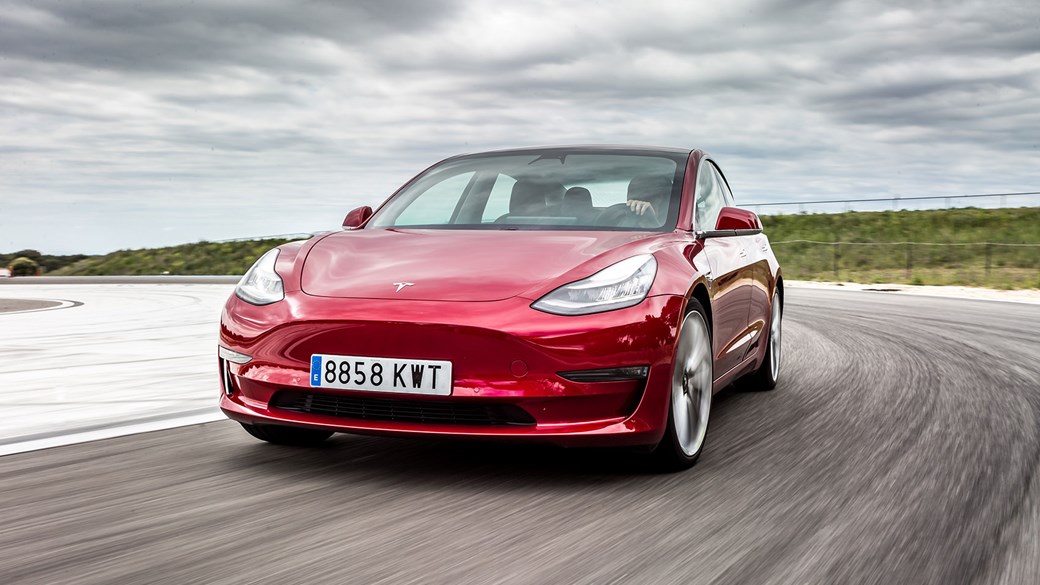
The Tesla Model 3 feels like a breakthrough car. After all the hype, the interminable delays, the theatrics of Tesla’s erratic leadership… the cheaper premium electric car is finally here in the UK – and we’ve driven it on British roads, as well as on track at Paul Ricard in the south of France.
We tested a Model 3 Performance, the £56,900 range-topper which is the first road-registered model in the UK. Tesla announced the starting price of the range at £38,900 for the regular Standard Range model, but we have yet to get into this cheapest Tesla which is expected to be the most popular. We will in due course.

The Performance model is quite a thing: you’ll notice its more compact dimensions the moment you clap eyes on the Model 3 (at 4694mm long and 2088mm wide, including mirrors, it’s bang-on compact executive money) but it’s recognisably a Tesla. It might share the Model S’s rump, but this is a more conventional saloon rear end, albeit one whose boot is cleverly hinged to allow a deep opening. Note also the full-length glass roof on all models, that cleverly swoops down uninterrupted to the boot.
CAR magazine lives with a Tesla Model S: check out our long-term test
Interior: a minimalist cabin
Even as you approach the Model 3, it’s apparent this car does things differently. There is no key, rather you use an RFID card (see below) or you can access the car via your smartphone. In our brief acquaintance, we ended up wafting the card up and down the B-pillar to find the secret spot rather too often – and then had to repeat the process inside before the car would set off. This seems a backward step from the keyless Model S (but may be circumnavigated if you place your pre-configured phone in the correct cradle).
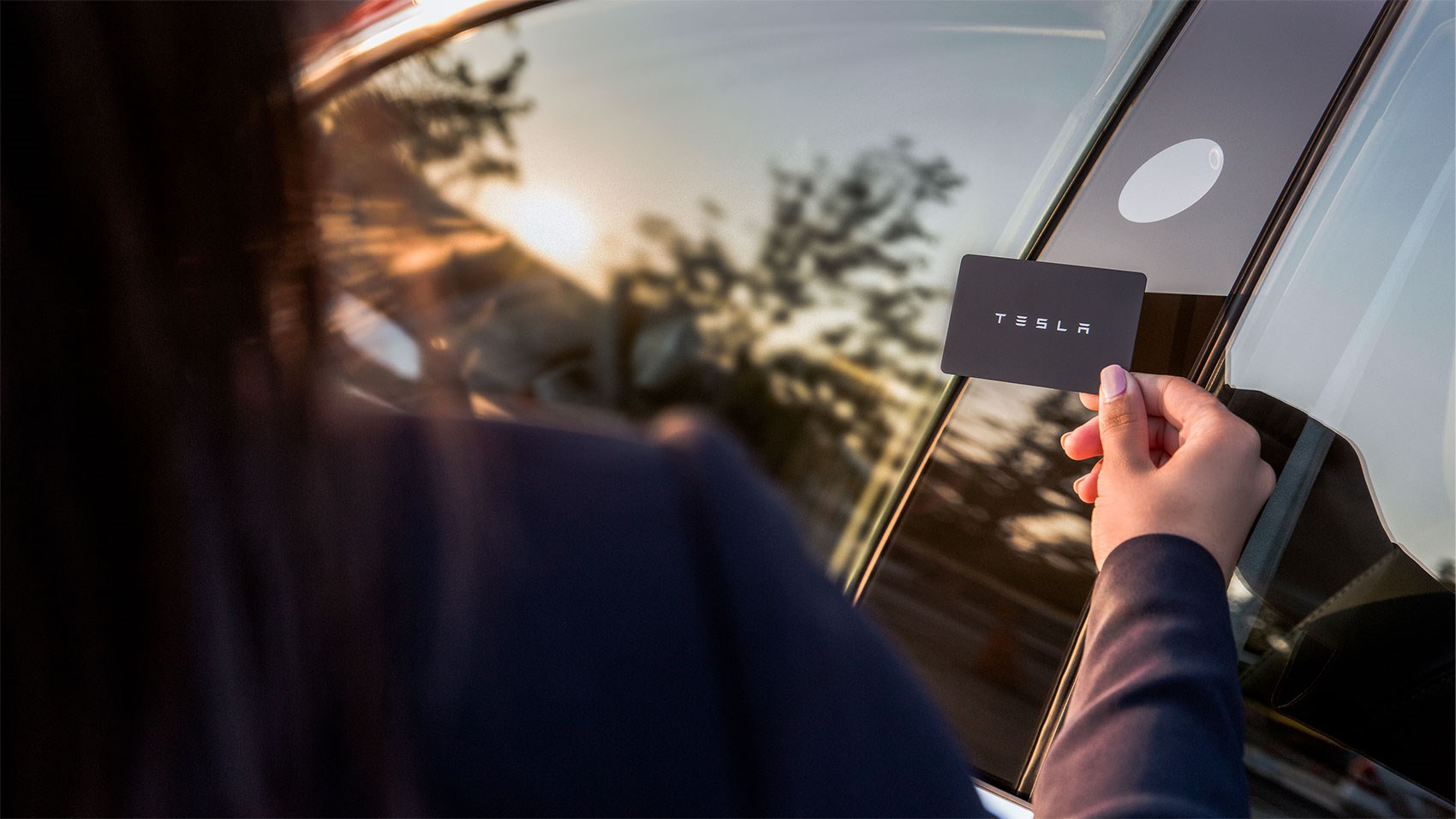
Note also the unusual, thin chromed door handles. No auto-pop-out theatrics here: you tap one end, nudging the rest of the handle out to open it manually. They open from the inside differently, too – with a simple door switch that looks just like an electric window button.
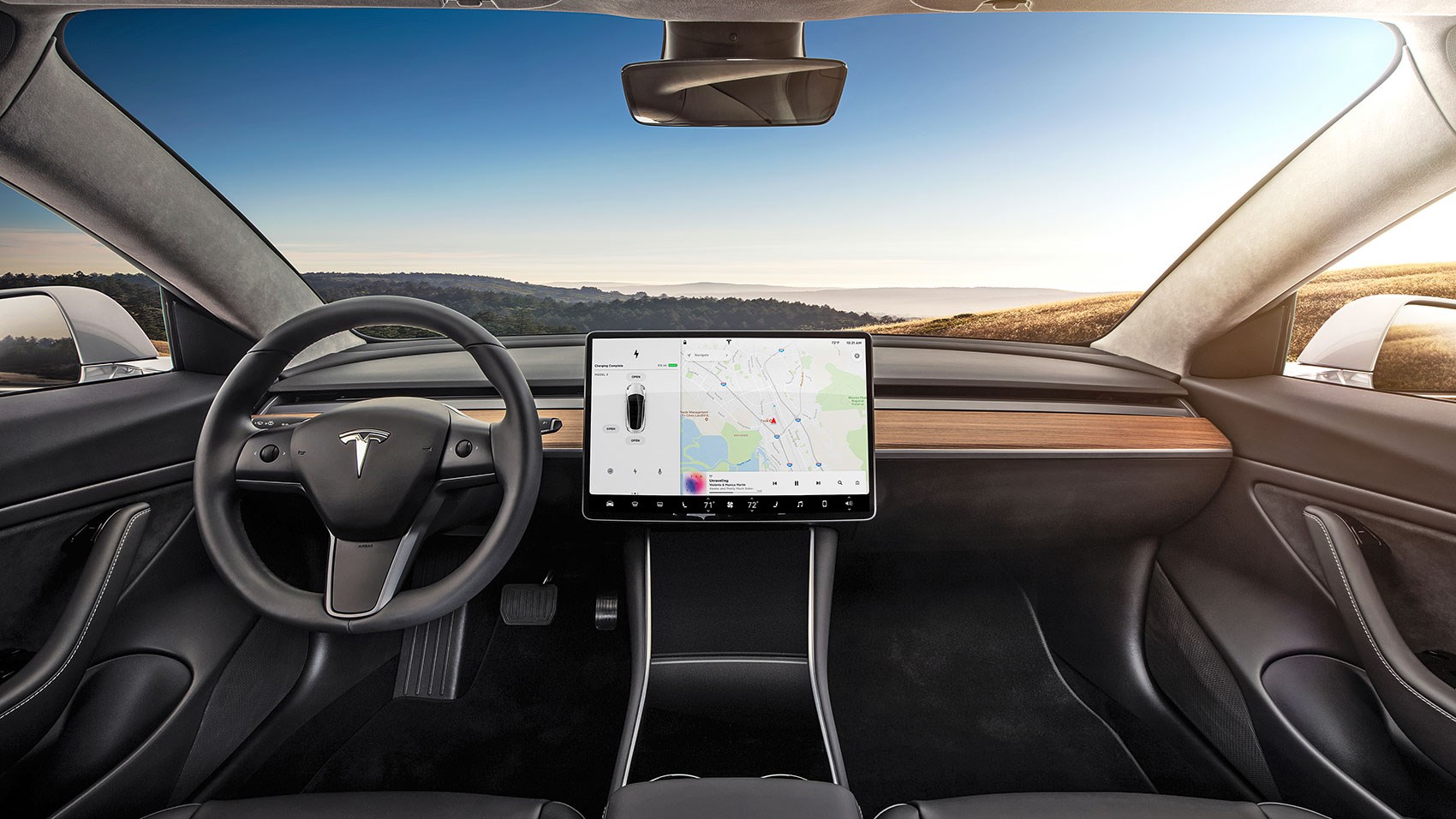
This is a roomy and minimalist cabin. The windscreen is panoramic, and the scuttle is low, meaning that the view forwards is clear and commanding, even if you don’t sit with seat in a high position. That full-length glass sunroof makes it bright and airy, and the floor is mercifully flat.
There are no buttons on the centre console, just a pair of roller-knobs on the steering wheel, four window switches on the door and (buried on the seat) the usual electric backrest and squab adjusters. It’s uncluttered and lovely – if you like controlling everything from a touchscreen. Happily, the Tesla Model 3’s 15-inch screen is pin-sharp, high-res and unerringly logical, even if you must learn the intricacies first (we stumbled with the door mirror adjustment for a good five minutes…).
This is especially impressive in the rear passenger compartment, where a tall adult can fit comfortably in the middle seat, thanks to a cleverly sculpted centre console armrest with space for a fifth person’s feet. Those in the rear will find their heads close to the panoramic screen, and if the driver gets enthusiastic in corners, there’s a real risk of banged heads on the bulky cant rail above the window.
 Indie CarMag